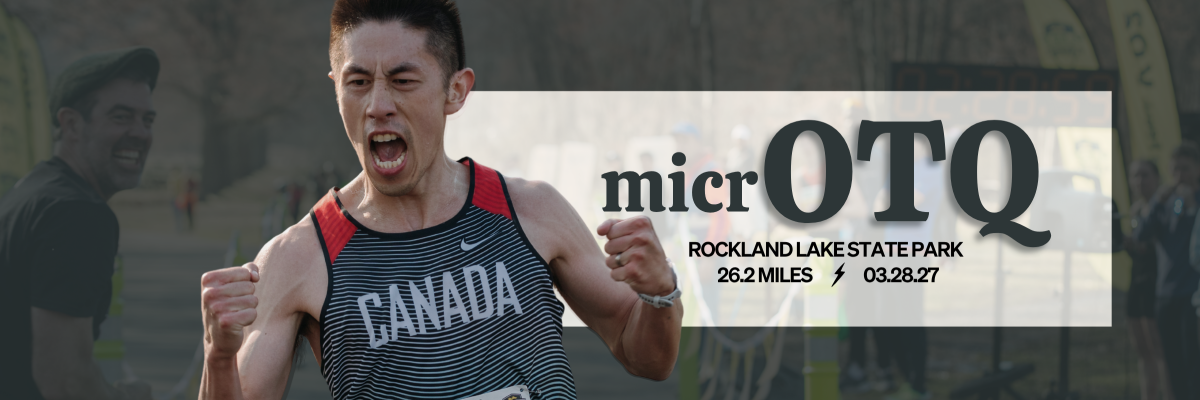

The Micro: micrOTQ 2027
- Date
- Sunday, March 28, 2027
- Start time
- 7:00 AM start (New York)
- Location
- Valley Cottage, New York
- Entry fee
- From $225 · goes up to $250 on Oct 1, 2026
- Fundraising
- Takes optional donations when you register
Registration is open.
We earn a small commission when you register through this link, at no cost to you. Details
Official race websiteAdd to calendar: Apple or Outlook · Google
Events and entry fees
| Event | Distance | When | Entry fee | Cap |
|---|---|---|---|---|
| micrOTQ | Marathon | Mar 28, 20277:00 AM | $225$250 after Oct 1, 2026 | 350 |
Entry fees exclude processing fees. Prices and dates come from the race's registration page and refresh nightly.
The Marathon fee goes up to $250 on Oct 1, 2026.
Race day planning
Entry fee schedule
- $225 until Sep 30, then $250 until Jan 31.
Online registration closes Jan 31, 2027, unless the race fills first.
How the price compares
At $225, entry is about 81 percent above a typical marathon in New York, which costs $124.50 right now.
What a typical finish looks like
A typical finisher at a marathon in New York runs 4:10:53, about 9:34 a mile, based on 12 races with published results. Women typically finish in 4:25:37 and men in 3:59:22.
Light and altitude
Sunrise on race morning is at about 6:47 AM, and the micrOTQ starts at 7:00 AM. The start sits about 180 feet above sea level.
Fees exclude processing fees. Comparisons use current entry fees and published results from races nearby.
Start location and course
299 Rockland Lake Rd, Valley Cottage, NY 10989
The pin marks the address the race lists, which is usually the start. The organizers have not shared a course map with us yet.
2026 results
All resultsAggregated from official results (Club Connecticut) for The Micro: micrOTQ. Individual finisher names are not stored here.
How fast do you need to be at The Micro: micrOTQ?
In 2026, the fastest tenth finished in 2:15:17 or better, the top quarter in 2:17:08, and half the field in 2:29:23; the last tenth came in after 2:41:54.
| Age | Women | Men |
|---|---|---|
| 20-29 | 2:35:32 | 2:14:51 |
| 30-39 | 2:35:48 | 2:15:24 |
Groups with fewer than five finishers are left out. Awards vary by race; check the race's rules.
What would my time get me?
Where a finish time would have placed in 2026.
Typical race-day weather
Around March 28 the day usually runs from 37°F at dawn to 53°F in the afternoon, with measurable rain on about 36% of days. Cold snaps dip to 27°F and hot years reach 69°F.
Based on 75 days within a week of the date over the last 5 years, from historical weather for the start area. Not a forecast.
Race details
- Where
- 299 Rockland Lake Rd, Valley Cottage, NY 10989Map
- Course
- Road
- Start elevation
- About 180 feet
- Donations
- Accepted when you register
- Distances
- Marathon
- Editions
- 2027 (Mar 28, 2027), 2026 (Mar 29, 2026)
Organize this race? Add details or a correction
Plan your race
Quick answers
- When is The Micro: micrOTQ?
- Sunday, March 28, 2027, starting at 7:00 AM.
- How much does it cost?
- Entry starts at $225 before processing fees, and rises to $250 on Oct 1, 2026.
- When does registration close?
- Online registration closes Jan 31, 2027, unless the race fills first.
- Is the entry fee high for New York?
- At $225, entry is about 81 percent above a typical marathon in New York, which costs $124.50 right now.
- Can I donate to a cause when I register?
- Yes. The registration form offers an optional donation, usually for the charity or nonprofit the race supports. The race's own page names the cause.
- What distances can I run?
- Marathon.
- How big is it, and how fast?
- In 2026, 59 runners finished the McKirdy MicrOTQ; the median finish was 2:29:23 and the winner ran 2:09:24.
- Where does it start?
- 299 Rockland Lake Rd, Valley Cottage, NY 10989.
From the organizers
A Race Series Designed by Runners, for Runners
In 2021, the coaches of the McKirdy Trained online coaching platform created the McKirdy Micro Marathon series to give athletes an opportunity to race. The mission was to help athletes run a personal best and qualify for the Boston Marathon or beyond. At the time, the world was just coming out of the COVID-19 pandemic where opportunities to run fast times were limited and motivation to continue training was difficult with no upcoming races on the calendar. 6 races successfully took place across the US over a 2 month span, and athletes were able to use their results to register for Boston. We considered it mission accomplished.